
Protect Useful Roof Life
Maintenance
Small, documented corrections can prevent avoidable damage and preserve future options.
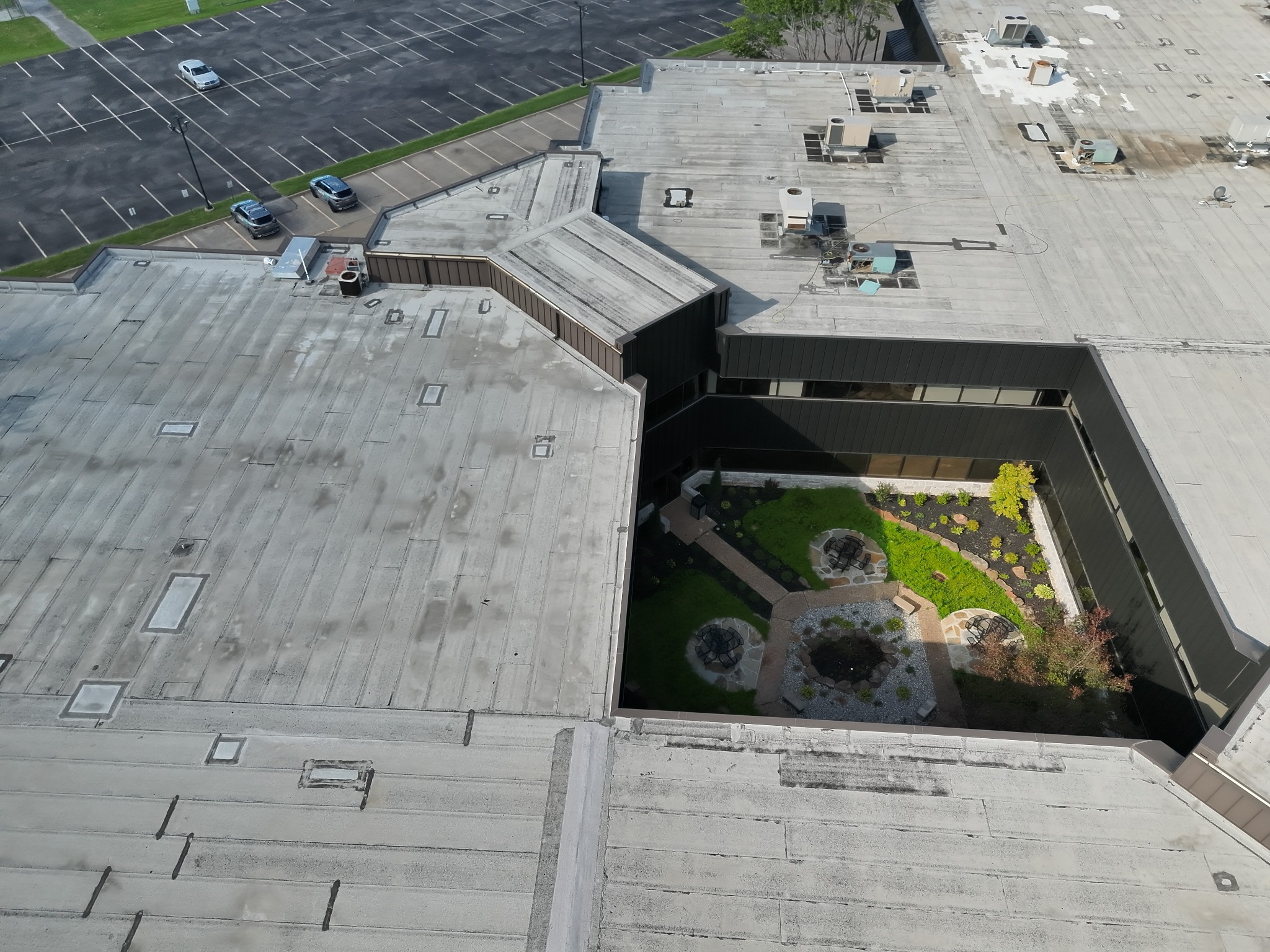
A disciplined maintenance program focuses on drainage, details, penetrations, traffic areas, recurring defects, and documentation—not random patching after leaks occur.
WHAT YOU RECEIVE
Decision-ready information, organized for the next step.
A disciplined maintenance program focuses on drainage, details, penetrations, traffic areas, recurring defects, and documentation—not random patching after leaks occur.
✓Scheduled condition reviews
Why this matters +
Are small conditions being found before they become emergency leaks?
How we helpScheduled reviews create a repeatable opportunity to catch drainage, detail, traffic, membrane, and repair issues while the corrective work is still manageable.
Read the related owner guide →✓Drain, scupper, gutter, and debris checks
Why this matters +
Is water leaving the roof the way the system was designed to handle it?
How we helpDrainage components and debris are checked because chronic water retention can accelerate deterioration, overload details, and mask otherwise manageable problems.
Read the related owner guide →✓Repair-priority lists with photographs
Why this matters +
What should the maintenance contractor address first?
How we helpPhotographed priorities make repair intent clear, distinguish urgent work from routine maintenance, and give ownership a record for verifying what was requested and completed.
Read the related owner guide →✓Leak-history and recurring-area tracking
Why this matters +
Is this a new leak—or the return of an unresolved condition?
How we helpRecurring locations are tracked against prior findings and repairs so repeat failures are treated as patterns that may require a different solution, not isolated work orders.
Read the related owner guide →✓Post-storm documentation
Why this matters +
What changed after the storm, and what evidence should be preserved now?
How we helpPost-event documentation creates a time-stamped condition record that can support repair planning, warranty discussions, insurance conversations, and future comparison.
Read the related owner guide →✓Coordination with warranties and capital plans
Why this matters +
Could today’s maintenance decision affect warranty coverage or a planned capital project?
How we helpMaintenance recommendations are considered alongside warranty obligations and the owner’s longer-term repair, restoration, or replacement plan so short-term work does not undermine the larger strategy.
Read the related owner guide →HOW IT WORKS
A clear path from project question to usable output.
01Inspect
Review vulnerable details, drainage, penetrations, traffic zones, and prior repairs.
Why this step +
Inspect
Review vulnerable details, drainage, penetrations, traffic zones, and prior repairs.
Review vulnerable details, drainage, penetrations, traffic zones, and prior repairs.
Read the related owner guide →02Prioritize
Separate immediate water-entry risks from routine maintenance and long-term capital items.
Why this step +
Prioritize
Separate immediate water-entry risks from routine maintenance and long-term capital items.
Separate immediate water-entry risks from routine maintenance and long-term capital items.
Read the related owner guide →03Correct
Define repair intent clearly and document completed work.
Why this step +
Correct
Define repair intent clearly and document completed work.
Define repair intent clearly and document completed work.
Read the related owner guide →04Review
Recheck recurring areas and update asset records after significant events or repairs.
Why this step +
Review
Recheck recurring areas and update asset records after significant events or repairs.
Recheck recurring areas and update asset records after significant events or repairs.
Read the related owner guide →COMMON QUESTIONS
What owners usually want to know first.
How often should a commercial roof be inspected?
Frequency depends on roof age, condition, warranty, environment, occupancy, and risk. Many owners benefit from at least annual reviews plus post-storm or post-work inspections.
Can maintenance delay replacement?
Good maintenance can preserve serviceable components and prevent avoidable deterioration, but it cannot reverse widespread system failure.
Should HVAC contractors be documented on the roof?
Yes. Rooftop work can affect flashings, supports, traffic paths, penetrations, and warranty requirements.
ROOF INTELLIGENCE KNOWLEDGE CENTER
Not ready to schedule? Start by asking better questions.
Use our owner-focused guides to understand moisture surveys, repair versus restoration versus replacement, contractor proposals, lifecycle planning, maintenance, warranties, drone data, and capital decisions.
NATIONAL REACH. OKLAHOMA ROOTS.
Need this information for a real building?
Start with the property, the roof question, and the decision you are trying to make.
Schedule a Roof Evaluation