
Thermal & Moisture Analysis
Roof Man Scan™
Identify concealed-condition patterns before they become expensive surprises.
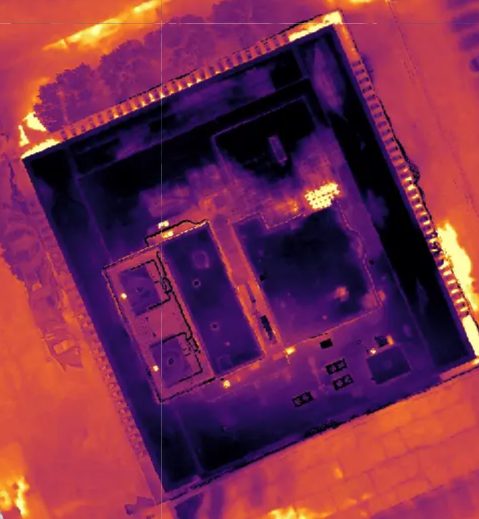
Roof Man Scan™ combines thermal imagery, moisture-screening methods, roof history, visual observations, and field verification strategies.
WHAT YOU RECEIVE
Decision-ready information, organized for the next step.
Roof Man Scan™ combines thermal imagery, moisture-screening methods, roof history, visual observations, and field verification strategies.
✓Thermal drone imagery
Why this matters +
Are the roof and environmental conditions suitable for capturing meaningful thermal differences?
How we helpScan™ plans thermal collection around construction, weather, solar loading, timing, and site conditions because poor capture conditions can produce patterns that are not useful for moisture investigation.
Read the related owner guide →✓Moisture-pattern interpretation
Why this matters +
Does a thermal anomaly mean the insulation is wet?
How we helpNot by itself. Thermal patterns are interpreted with roof construction, visual conditions, weather, leak history, and verification evidence before any moisture conclusion is made.
Read the related owner guide →✓Impedance screening where appropriate
Why this matters +
Would another non-destructive screening method strengthen or challenge the thermal result?
How we helpWhen compatible with the assembly, impedance or capacitance screening can add a second evidence layer and help determine where more definitive verification is worthwhile.
Read the related owner guide →✓Verification-point planning
Why this matters +
Where should physical verification be performed to answer the moisture question with the least unnecessary disruption?
How we helpSuspected patterns, roof construction, visual conditions, and screening results are used to choose representative verification locations instead of random cuts.
Read the related owner guide →✓Suspected wet-area mapping
Why this matters +
Where are the suspected moisture-related areas, and how much roof do they represent?
How we helpScan™ maps investigation areas spatially so ownership can understand extent and location while keeping suspected areas separate from verified moisture-remediation quantities.
Read the related owner guide →✓Method limitations clearly stated
Why this matters +
What can this survey not prove on its own?
How we helpThe report states capture conditions, roof/material limitations, screening constraints, and verification needs so a useful indicator is never presented as certainty it does not support.
Read the related owner guide →HOW IT WORKS
A clear path from project question to usable output.
01Prepare
Confirm roof type, weather window, access, history, and project questions.
Why this step +
Prepare
Confirm roof type, weather window, access, history, and project questions.
Confirm roof type, weather window, access, history, and project questions.
Read the related owner guide →02Capture
Collect visual and thermal imagery under suitable conditions.
Why this step +
Capture
Collect visual and thermal imagery under suitable conditions.
Collect visual and thermal imagery under suitable conditions.
Read the related owner guide →03Correlate
Compare patterns with roof details, leak history, visual conditions, and field readings.
Why this step +
Correlate
Compare patterns with roof details, leak history, visual conditions, and field readings.
Compare patterns with roof details, leak history, visual conditions, and field readings.
Read the related owner guide →04Report
Map suspected areas and explain confidence, limitations, and recommended verification.
Why this step +
Report
Map suspected areas and explain confidence, limitations, and recommended verification.
Map suspected areas and explain confidence, limitations, and recommended verification.
Read the related owner guide →COMMON QUESTIONS
What owners usually want to know first.
Is it non-destructive?
Thermal and impedance screening can be non-destructive, but selected verification or core sampling may be recommended.
Can it find every wet area?
No method is perfect. Results depend on materials, weather, construction, access, and selected procedures.
Why combine thermal and visual data?
Visual imagery documents surface conditions while thermal data can reveal temperature patterns that warrant additional investigation.
ROOF INTELLIGENCE KNOWLEDGE CENTER
Not ready to schedule? Start by asking better questions.
Use our owner-focused guides to understand moisture surveys, repair versus restoration versus replacement, contractor proposals, lifecycle planning, maintenance, warranties, drone data, and capital decisions.
NATIONAL REACH. OKLAHOMA ROOTS.
Need this information for a real building?
Start with the property, the roof question, and the decision you are trying to make.
Schedule a Roof Evaluation